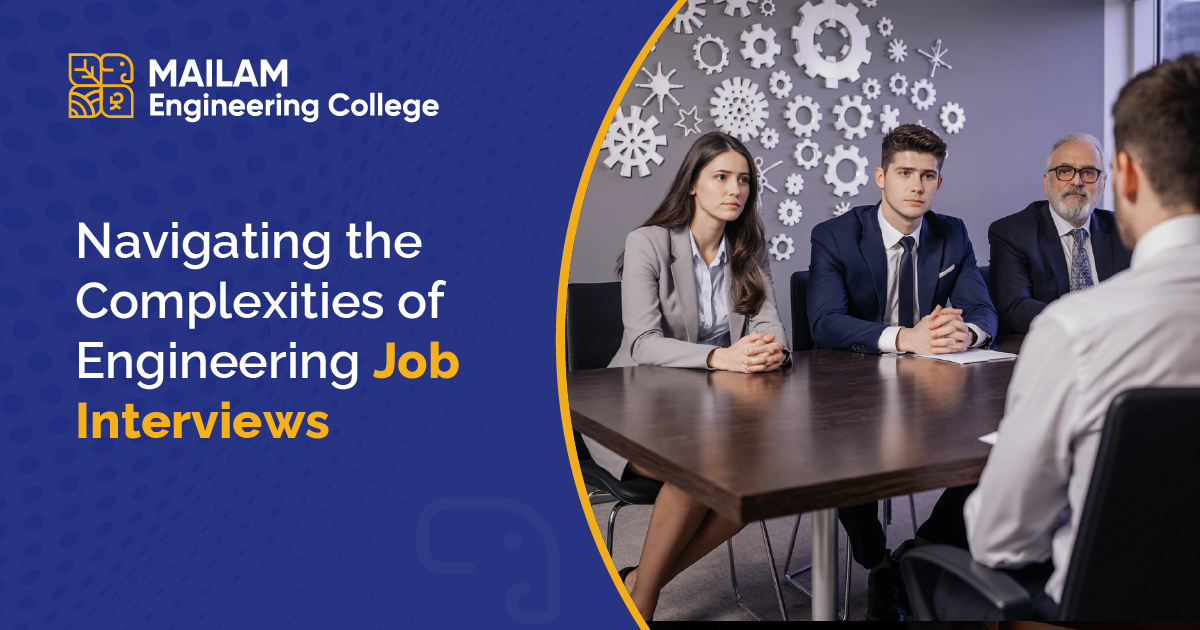
The dynamics of engineering job interviews have increased to multi-level assessment tools to check codicils on technical knowledge proficiency, communication skills, and readiness to hit the ground implementing their ideas practically.
It is no more required to only possess academic brilliance to survive such situations effectively; instead, one should undergo rigid engineering job interview preparation based on direct exposure and professional acumen to make all cruelties of job interviews an advantageous stepping stone towards an extraordinary career path.
Introduction
For engineering students, job interviews can be the most critical step in their academic career. They spend several years of academic life, culminating in a phase where all their career choices are made within a matter of minutes.
But modern engineering job interviews are no longer limited to question-answer techniques described in textbooks.
Today, job recruiters apply their assessment criteria to job seekers on various levels, such as knowledge, practical application, communication skills, adaptability, and reception to industry tasks.
With increasing industries and competition among them, engineering job interview preparation is valued, as is academic achievement.
In this blog, let us discuss the intricacies associated with engineering interviews, the difficulties students encounter, the expectations of recruiters, and how students can capitalise on these opportunities through proper preparation.
Changing Landscape of Engineering Job Interviews
The trend of engineering interviews has changed significantly in the last ten years. Previously, interviews were majorly focused on subject knowledge and academic scores.
Nowadays, companies look forward to recruiting engineers with critical thinking who are capable of solving problems in real life and also are good team players.
Most engineering organisations now operate a multi-stage interview process, including elements such as
- Aptitude and logical reasoning tests
- Technical written or online assessments
- One or more technical interview rounds
- Application or scenario-based problem-solving activities
- Behavioral or HR interviews
Around 70% of the engineering recruiters stress practical skills and problem-solving ability rather than simply theoretical knowledge.
This change in trend clearly points out why engineering job interview preparation should not be just about memorising formulas or definitions.
Common Challenges Faced by Engineering Students
Many engineering graduates experience poor performance during interviews, despite having strong academic backgrounds.
Speaking from experience in mentoring students, these challenges range from technical to psychological.
- Discontinuities between theory and application
The thing is, students know the concepts quite well, but they struggle to explain how these concepts apply in a real industrial setting.
Among the ones that interviewers ask are those like, Where is this concept used in industry? or How would you apply this in a real project?
- Poor projects explanation
Many students put projects on their resumes and then fail to clearly describe what their contribution was. Interviewers seek to know your role, how you did the decision-making, and what you learned.
- Anxiety and communication affecting barriers
Even the best-prepared candidates are negatively affected by anxiety, lack of confidence, or hesitation in answering questions.
- Look past hr and behavioral questions
Some of the students focus on purely technical subjects and do not prepare for HR, perhaps thinking that it is easy. Actually, selections have been made based on performance in the HR round.
These challenges can be overcome with some structured and disciplined approach to engineering job interview preparation.
What Recruiters Look for in Engineering Candidates
- Strong technical fundamentals
Irrespective of the stream, there are always a few elementary or fundamental expectations that the interviewers would want the candidates to possess a good grasp of.
While a mechanical engineer may be put through a test about manufacturing processes or design principles, the computer science alumnus gets bombarded with queries on data structures, algorithms, and databases.
- Problem solving and analytical thinking
Many interviewers will simply present a problem with which one is unfamiliar because they want to see the logic behind a thought process, not necessarily an answer. They look at how the candidate approaches a problem, asks questions to clarify, and finds a solution.
- Internship and project experience
Practical exposure plays a very important role during campus interviews. Whoever can talk confidently about internships, industrial training, or live projects generally comes out on top.
- Communication and Professional Attitude
Hiring managers look for engineers with strong abilities to communicate ideas, work with a team, and be open to a company’s culture.
Creating a Structured Engineering Job Interview Preparation Plan
At mailam engineering college, we encourage students to prepare for interview questions as an ongoing process and not something to be done as revision at the end.
Revisiting core subjects methodically
Rather, students should work on subjects topic by topic for redemonstration. In-depth understanding of a topic is crucial since it enables a candidate to answer follow-up questions comfortably.
Preparing project narratives
Each student should be able to respond to:
- What was the problem statement?
- What was your role?
- What challenges did you encounter?
- What happened next?
A good project explanation needs ownership, technical knowledge, and learning.
Practicing interview questions regularly
Mock interviews, group discussions, and faculty-conducted interviews are practices that make students comfortable with the types of questions being asked and answered in the technical or HR fields.
Improving soft skills and body language
Effective communication, employer etiquette, and positive body language play important roles in making an impression on the interviewer, more so in HR sessions.
Importance of Internships for Interview Success
Internships help to create a connection between academics and industries. They help in gaining practical exposure and become a great topic to be discussed in interviews.
When students describe their real-life work experiences, such as working on a production floor, creating software modules, helping with site supervision, or analysing datasets, this gives a boost to their profile.
Internships assist students in many ways:
- Understanding work culture
- Encourage confidence
- Identify career interests
- Decrease the fresher tag
This is why internships are so important to engineering job interview preparation.
Mailam Engineering College: Interview and Internship Spotlight
We at Mailam Engineering College consider interview preparation a natural extension of academic learning. We believe that successful engineering job interview preparation essentially begins with strong foundations in technical knowledge and real-world exposure.
We closely work with local industries, startups, and research organisations to offer our students relevant engineering internships in Villupuram and beyond.
These partnerships ensure that the students get hands-on experience that shall directly complement their interview performance and career goals.
Mailam facilitates this through specific guidelines:
- Internship fairs supported by an active placement cell
- Industry MoUs with reputed companies across core and emerging domains
- Career guidance for technical and HR interview preparations.
With integrated internships together with focused interview preparation, mailam engineering college ensures that our graduates enter the job market with confidence, clarity, and the practical skills required to succeed in professional engineering roles.
To sum up
The interview for an engineering job sounds complex, but when appropriately approached and prepared, interviews become opportunities rather than obstacles.
Strong technical foundations, practical exposure, clear communication, and confidence are the pillars of interview success.
We at mailam engineering college groom and get our students ready to face interviews imbued with industry awareness and self-belief.
Structured internships, mentorship, and focused preparation go a long way in bridging the gap between classroom learning and professional expectations.
With good engineering interview preparations, every single interview becomes the stepping stone on the way to achieving success as an engineer.
FAQs
- Why is preparation for an engineering job interview important?
These interviews test knowledge in engineering, problem-solving skills, and one’s ability to communicate. Proper preparations enhance confidence and very considerably improve selection chances.
- What should engineering students revise before interviews?
The revision for core subjects should be done, project work understood in-depth, interview questions practiced, and preparation regarding HR discussions should be made.
- How do internships improve interview performance?
Internships provide practical exposure, real examples, and confidence. Recruiters prefer those who can link theory with reality.
- Are mock interviews beneficial to engineering students?
Yes, mock interviews allow students to identify their weaknesses, improve their communication, and become familiar with real situations that may arise in an interview.
- Do recruiters give more importance to skills over marks?
While the academic scores are important, most of the recruiters stress skills, practical exposure, and attitude rather than merely marks.
- How does mailam engineering college support interview preparation?
The facilities offered include internships, mentorship, mock interviews, placement training, and industry exposure to prepare the student to enter engineering.